Part 1 — Purpose and Executive Summary
This page documents a 16‑year record of outreach to domestic and international media organizations regarding a contested medical, administrative, and postmortem documentation case in Ibaraki, Japan. The objective is not to evaluate the intentions of individual journalists, but to present a verifiable chronology of:
- which outlets were contacted,
- what materials were submitted,
- which communication channels were used,
- what responses—if any—were received,
- and what irregularities were observed in returned correspondence.
- More than 30 domestic and international outlets were contacted between 2010 and 2026.
- Two outlets (Yomiuri Shimbun, Sunday Mainichi) engaged in initial communication but discontinued contact.
- International submissions via SecureDrop, Tor, and Tails OS received no responses.
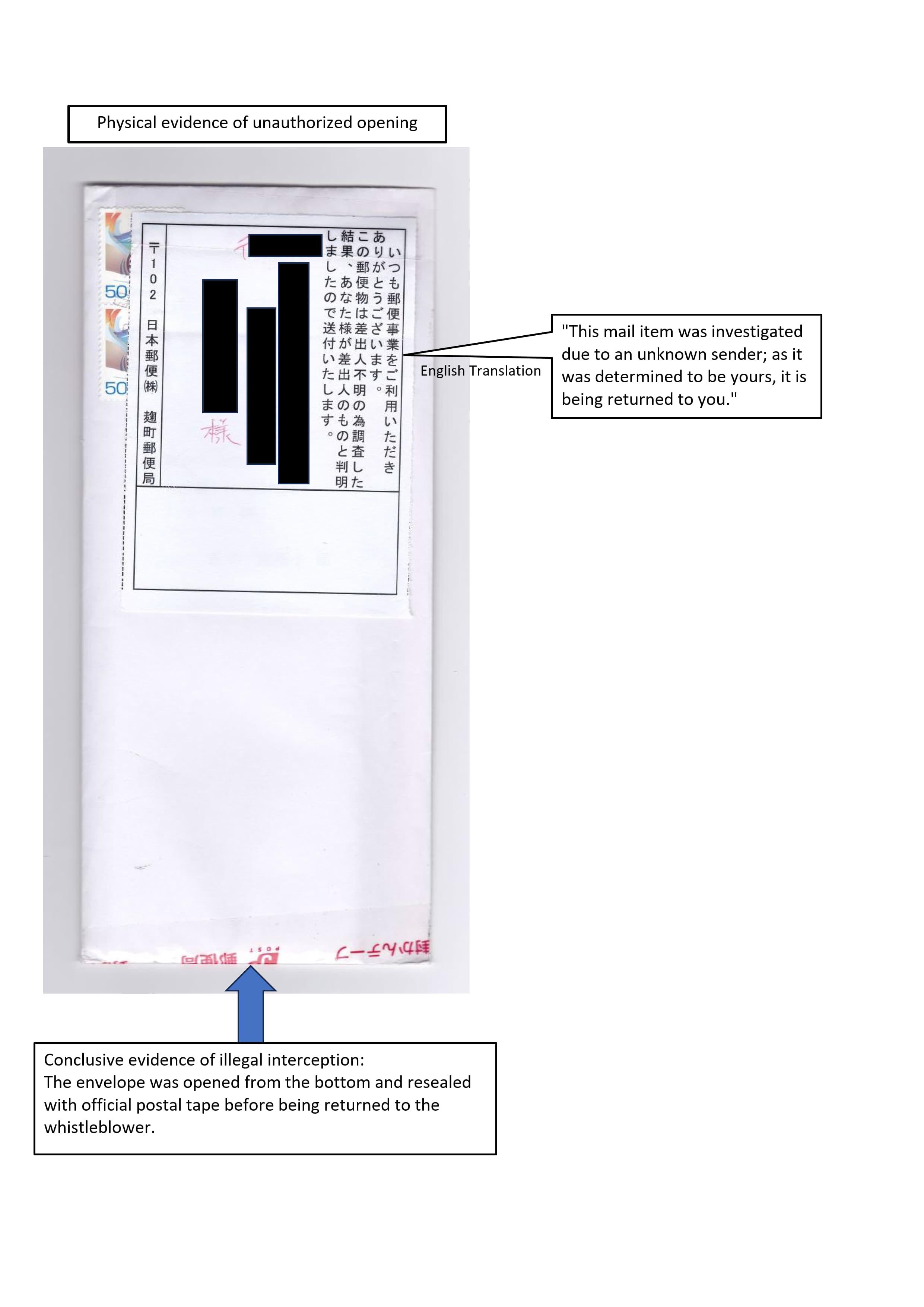
- One postal submission was returned with clear signs of opening and resealing.
- Across all channels, no outlet initiated an independent investigation.
Part 2 — Outreach Strategy and Communication Methods
To maximize the likelihood of independent review, the author employed a multi‑layered outreach strategy:
- Multi‑channel submissions: email, postal mail, web forms, telephone inquiries, and in‑person visits.
- Primary documentation: all submissions included core evidence (postmortem certificate copy, registry record, billing data, etc.).
- Record preservation: all communications were logged, including timestamps, delivery methods, and responses.
- Anonymous digital pathways: international submissions used Tails OS, Tor Browser, metadata‑stripped files, and SecureDrop.
This section provides the methodological context for interpreting the response patterns documented below.
Part 3 — Domestic Media Outreach (Japan)
3‑1. Outlets Contacted
- Television Networks: Nippon TV, TBS, Fuji TV, TV Asahi.
- National Newspapers: Asahi Shimbun, Mainichi Shimbun, Yomiuri Shimbun.
- Weekly Magazines: Shincho 45, Weekly Shincho, Weekly Bunshun, Weekly Asahi, Weekly Gendai, Weekly Post, Weekly Kinyobi, Monthly WILL.
- Investigative Outlets: Waseda Chronicle (Tansa).
- International Bureaus in Tokyo: Wall Street Journal Japan Bureau.
3‑2. Response Patterns
- Initial engagement only: Yomiuri Shimbun (Mito Bureau), Sunday Mainichi.
- Administrative‑level responses only: some outlets acknowledged receipt but did not proceed.
- No response: the majority of outlets provided no reply despite multiple submissions.
Part 4 — International Outreach via SecureDrop and Encrypted Channels
4‑1. Outlets Contacted
- The Guardian (UK)
- The New York Times (US)
- The Intercept (US)
- VICE Media (US)
- The Globe and Mail (Canada)
4‑2. Submission Protocol
- Submissions were made using Tails OS, Tor routing, and SecureDrop portals.
- All files were stripped of metadata and accompanied by English summaries.
- Multiple submission cycles were conducted.
Outcome: No responses were recorded from any international outlet.
Part 5 — Case Studies: Documented Interaction Sequences
Case Study I — Yomiuri Shimbun (Mito Bureau)
- August 2011: Reporter T contacted the author after receiving a briefing package.
- September 4, 2011: A multi‑hour in‑home meeting was conducted; the reporter reviewed all materials.
- Post‑meeting: Follow‑up replies referenced workload; communication ceased thereafter.
- Headquarters inquiry: A formal inquiry to the Tokyo Headquarters received no response.
Case Study II — Sunday Mainichi (Weekly Magazine)
- February 22, 2016: Reporter S received materials during an in‑person visit and requested future submissions to her individual name.
- March 2016: A typed “legal review” was provided without attribution; content aligned with the hospital’s narrative.
- Returned correspondence: A follow‑up questionnaire was returned with the lower edge opened and resealed.
Part 6 — Structural Patterns and Implications
Across all outreach attempts, several structural patterns emerged:
- Non‑response after primary evidence submission: In multiple cases, communication ceased immediately after detailed documentation was provided.
- Reliance on institutional explanations: Some reporters referenced police or hospital positions as sufficient grounds not to proceed.
- Challenges in cross‑domain cases: The case spans medical, administrative, and postmortem documentation domains—an uncommon combination that may exceed standard newsroom workflows.
- Irregular handling of physical correspondence: The opened‑and‑resealed envelope suggests potential vulnerabilities in postal handling for sensitive submissions.
- No independent investigation initiated: Despite extensive outreach, no outlet—domestic or international—initiated a formal review.
This page does not speculate on motives. Its purpose is to provide a verifiable record for future researchers, journalism scholars, and investigative units who may wish to examine how complex, cross‑domain cases interact with media intake systems.